- Pizza Stone for Solymac Oven
- Pizza stone for oven BAKERS PRIDE
- Pizza stone for BARTSCHER oven
- Pizza stone for Cookmax oven
- Refractory stone for CUPPONE pizza oven
- Pizza stone for FIMAR oven
- Pizza stone for GAM oven
- Pizza stone for oven GGF
- Refractory Stone for Italforni Pizza Oven
- Pizza stone for Moretti oven
- Refractory Stone for OEM Pizza Oven
- Pizzagroup Refractory Stone
- Refractory Stone for Prismafood Pizza Oven
- Pizza stone for oven RESTO ITALIA
- Pizza stone for Tornati oven
- Pizza stone for ZANOLLI oven
- Pizza stone for ZANUSSI oven
- Refractory stone for gas oven
- Refractory stone for pizza oven FORNITALIA
- Refractory stone for Rinaldi Superforni pizza oven
- Refractory stone for electric oven
- Matricola ML 44 Refractory Stone for Oven
- Round Refractory Stone for Pizza Oven



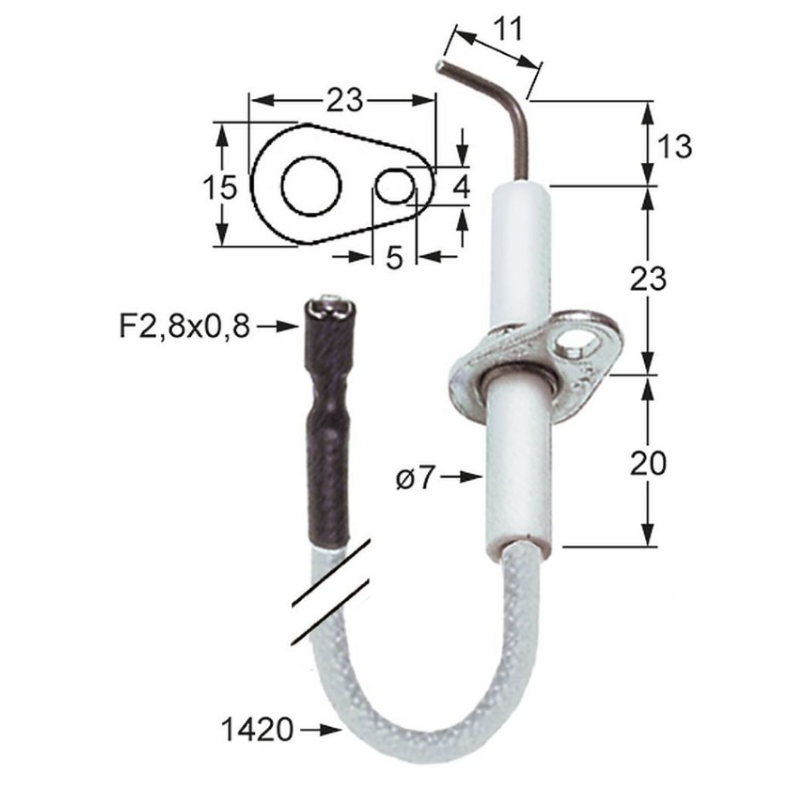


Kit comprising 2 electrodes with cables for professional TORNATI FORNI TF60-GAS, TF90-GAS and TF99-GAS gas pizza ovens.
The system includes one electrode for burner ignition and one electrode for flame detection by ionisation.
Position in the oven:
- Right electrode: burner ignition
- Left electrode: flame sensing by ionisation
Both electrodes are supplied with their cables and have different dimensions.
Kit contents
1 electrode Ø 7 × 56 mm with cable
- Diameter: 7 mm
- Electrode length: 56 mm
- Cable length: 1390 mm
- Overall length with cable: 1460 mm
- Quantity: 1
1 electrode Ø 7 × 46 mm with cable
- Diameter: 7 mm
- Electrode length: 46 mm
- Cable length: 1390 mm
- Overall length with cable: 1450 mm
- Quantity: 1
The kit therefore contains 2 electrodes complete with their cables.
What does the ignition electrode do?
The ignition electrode, located on the right, produces the spark required to ignite the gas burner.
When heat is required, the ignition system generates a spark at the electrode to ignite the air-gas mixture at the burner.
A damaged or incorrectly positioned ignition electrode, or a faulty cable, can cause ignition problems or prevent the burner from lighting.
What does the flame sensing electrode do?
The electrode located on the left is used to detect the presence of the flame after burner ignition.
When a flame is present, its electrical properties allow the control system to detect a very small ionisation current.
This signal confirms that the burner has successfully ignited and a flame is present.
If the flame is not correctly detected, the safety system can shut off the gas supply. This prevents gas from continuing to flow when the presence of a flame has not been confirmed.
What are the symptoms of an ionisation fault?
A damaged, dirty or incorrectly positioned flame sensing electrode, or a problem with its electrical connection, may prevent the control system from detecting the flame correctly.
Possible symptoms include:
- The burner ignites and then shuts down shortly afterwards
- A flame is present, but the oven goes into safety lockout
- The system makes several ignition attempts
- Burner operation becomes intermittent
- The control system fails to recognise the flame
These symptoms do not necessarily mean that the electrode needs replacing.
Similar faults can also be caused by the electrode position, cable, electrical connections, contamination, grounding/earthing or the burner control system.
The fault should therefore be diagnosed before replacing the component.
Flame sensing electrode or thermocouple?
A flame sensing ionisation electrode is not a thermocouple.
A thermocouple uses the heat from the flame to generate a small electrical voltage.
An ionisation electrode operates differently: the control system uses the electrical properties of the flame to confirm its presence.
Both systems contribute to gas safety, but they operate on different principles.
TORNATI FORNI compatibility
Suitable in particular for:
- TF60-GAS
- TF90-GAS
- TF99-GAS
Check before ordering
Before ordering, check:
- The exact TORNATI FORNI oven model
- The presence of both electrodes
- The electrode dimensions
- The cable lengths
- Their positions
- The existing connections
Replacement must be carried out with the oven disconnected from the electrical supply and the gas supply shut off, by a qualified professional.